Protected species surveys
Ecology Services
Explore our wide range of services designed to ensure that your project delivery is compliant, timely and with minimal impact on wildlife and nature
Bats
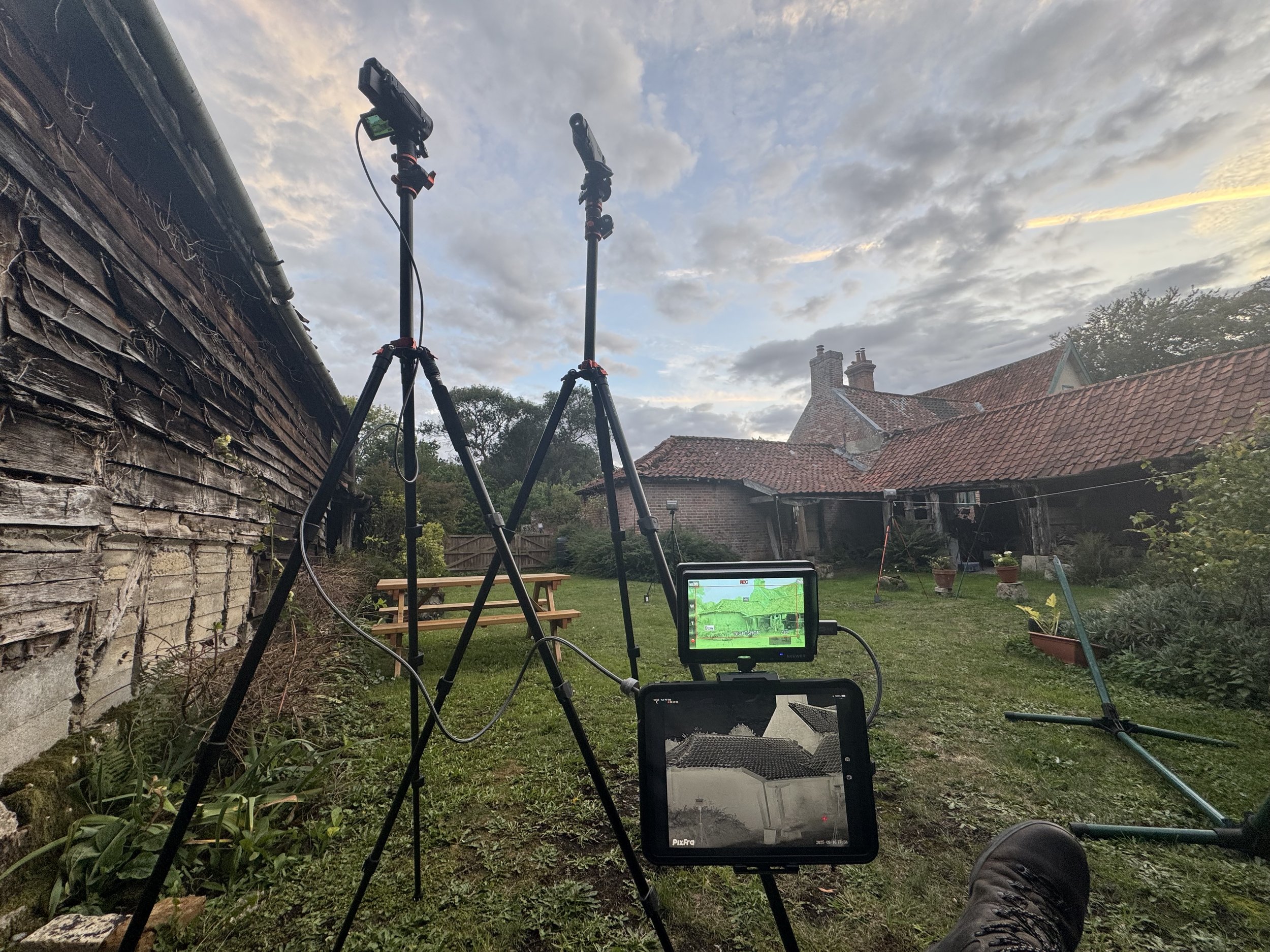
All bat species in the UK, their breeding sites and resting places are fully protected by law. Any works that have potential to affect bats may require surveys and licensing.
We carry out bat emergence / dawn re-entry surveys, following an initial assessment that determines the survey effort. We also conduct transect surveys and remote activity monitoring surveys. Surveys are done in line with Bat Conservation Trust’ current best practice.
Surveys are typically carried out between April and September inclusive, but some visits must be carried out between May - August (where there is a risk of maternity roost). The number of surveys varies between one to three visits for emergence/re-entry surveys, depending on the suitability and evidence recorded. The survey effort for transect and remote monitoring surveys is typically once a month, but depends on the habitats and project’s likely impacts.
All our survey visits are led by a licensed bat surveyor, which ensures that surveys are completed to a highest standard and allows for internal inspections. Surveyors use specialist equipment, including bat detectors, infra-red and thermal cameras. Bat surveys often coincide with barn owl surveys, as they are often found in similar habitats. We are licensed to carry out a full assessment (with minimal disturbance) for both species.
Findings are provided in a dedicated report, together with an assessment of potential impacts, and recommendations, which may include mitigation and/or compensation. Report would also confirm if protected species licence is required.
Please see more information about bat licensing and mitigation options.
Barn owl
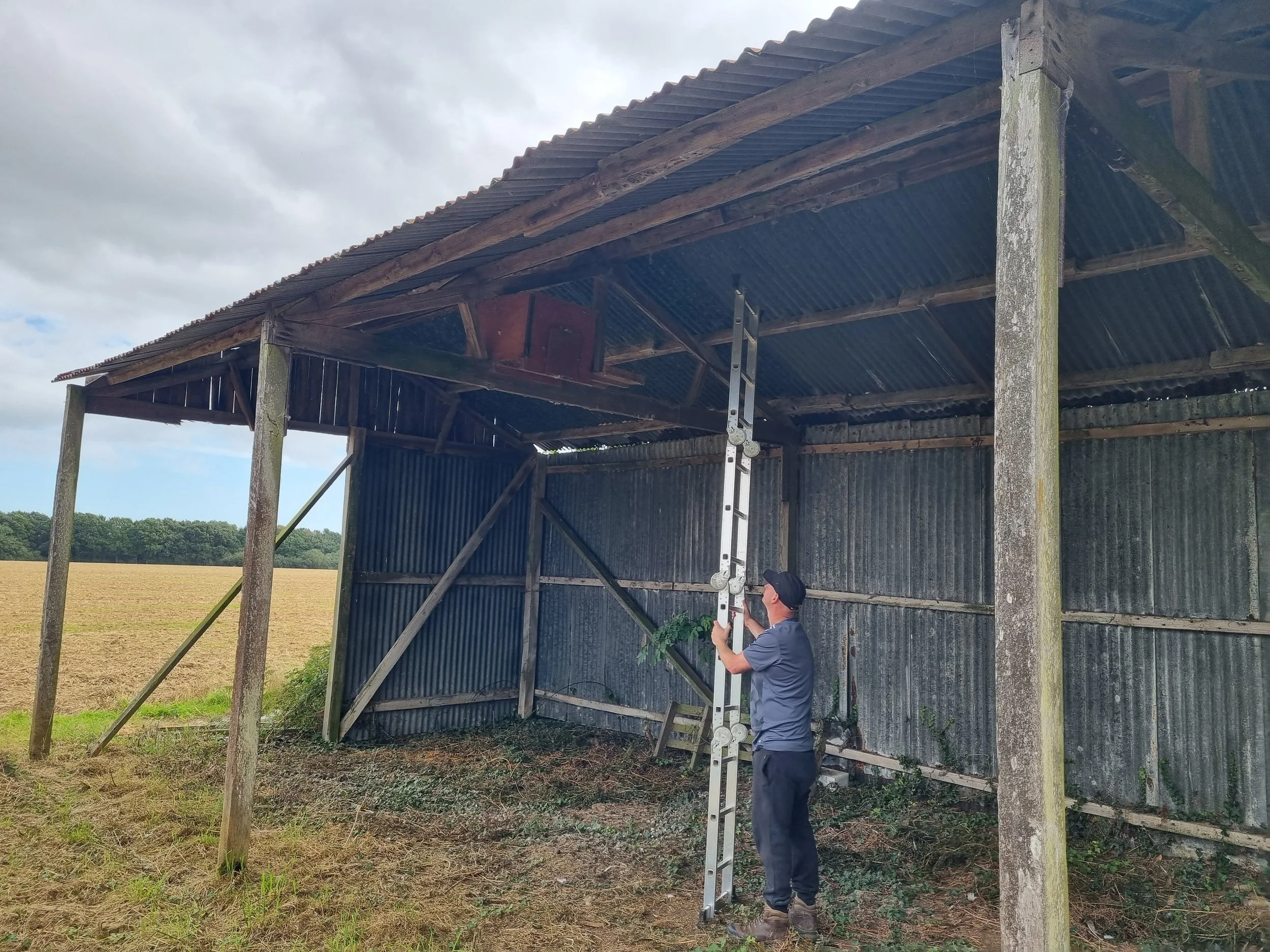
Barn owl, their nests and eggs are protected under Wildlife and Countryside Act 1981, as well as other wild birds. It receives extra protection under the law against disturbance whilst nesting. It is against the law to disturb barn owl whilst it is building a nest, or whilst it is in, on or near a nest containing eggs or young. It is also an offence to disturb barn owl’s dependent young.
We are licensed (under CL29) to undertake surveys of barn owl for development projects, which includes surveying buildings, trees and other preferred nesting sites. This allows us to confirm if the barn owl is present/absent and/or breeding on your site. Barn owl surveys often coincide with bat surveys, as they are often found in similar habitats. We are licensed to carry out a full assessment (with minimal disturbance) for both species.
We follow CIEEM’s good practice and Barn Owl Trust’s guidance for barn owl surveys.
Barn owls surveys and assessments can be done any time of the year.
Prior to a site visit, we analyse the data provided and carry out a desktop check. Field survey findings are provided in a dedicated report, together with an assessment of potential impacts, further survey effort required and recommendations, which may include mitigation and/or proposed enhancements.
Please see more information about barn owl licensing and mitigation options.
Badger
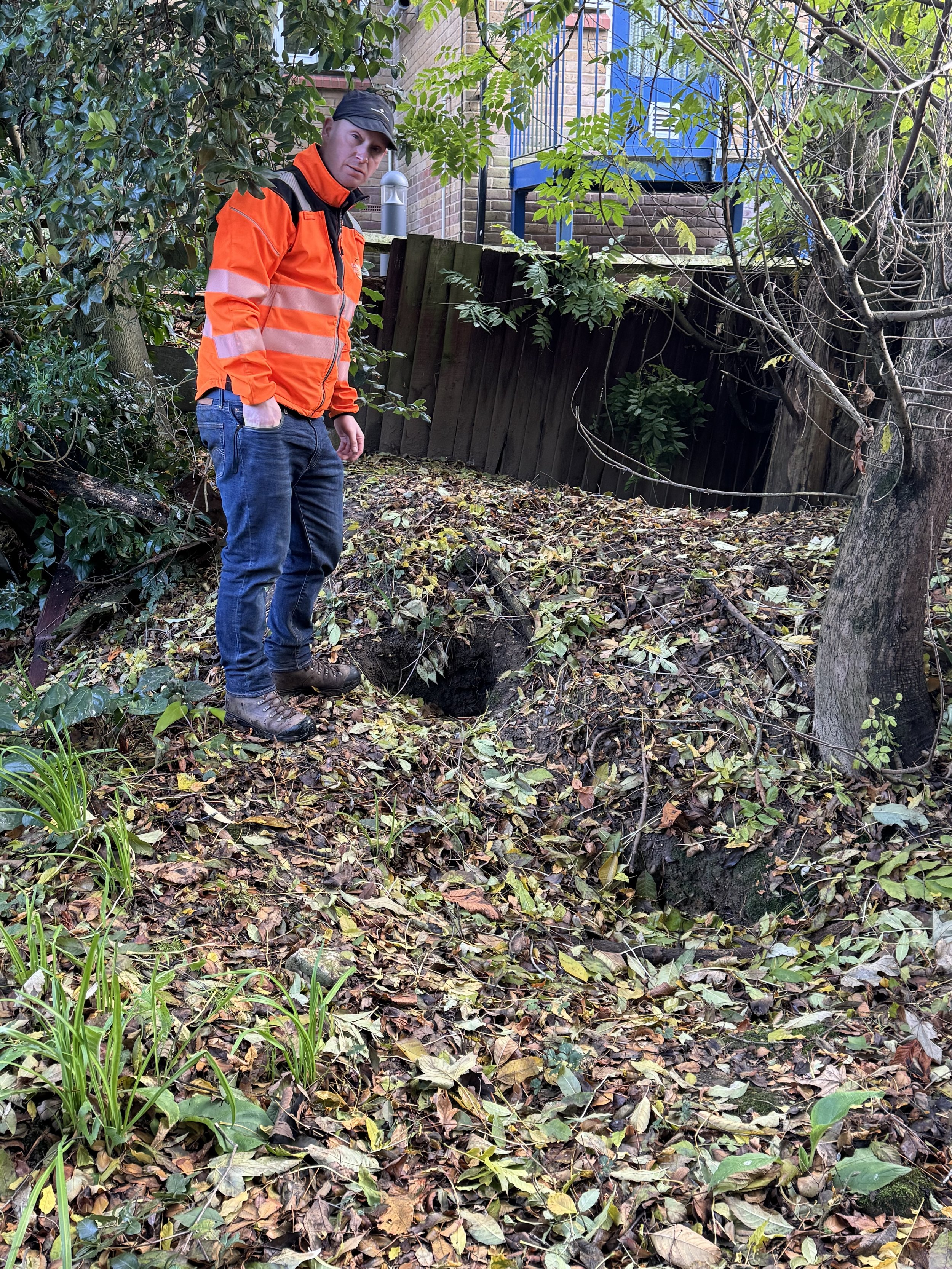
Badger and their setts (tunnels and chamber where they live) are protected by law under the Protection of Badgers Act 1992 (as amended). Where works cannot avoid disturbing a badger in their sett or where their sett will be damaged, a licence from Natural England can be issued.
Our principal ecologist is registered to use a licence (CL35) to monitor, evict or exclude badger from their sett or destroy a sett for development or to prevent serious damage. This licence also allows for faster approval (typically 5 working days) of application than a standard licence (typically 30 working days).
A badger site visit is required to understand how they are using the site and how any proposal may affect badger and their setts.
The optimum time for badger surveys is February to April, while a secondary less pronounced peak of activity occurs in October.
Prior to a site visit, our team review information provided and carry out a desktop survey, following which a date is agreed for a site visit. We use specialist equipment, including trail cameras to confirm badger sett activity status.
Survey findings are provided in a dedicated report, with an assessment of potential impacts, together with recommendations, which may include further surveys, mitigation and/or licence requirements.
Please see more information about badger licensing and mitigation options.
Reptiles
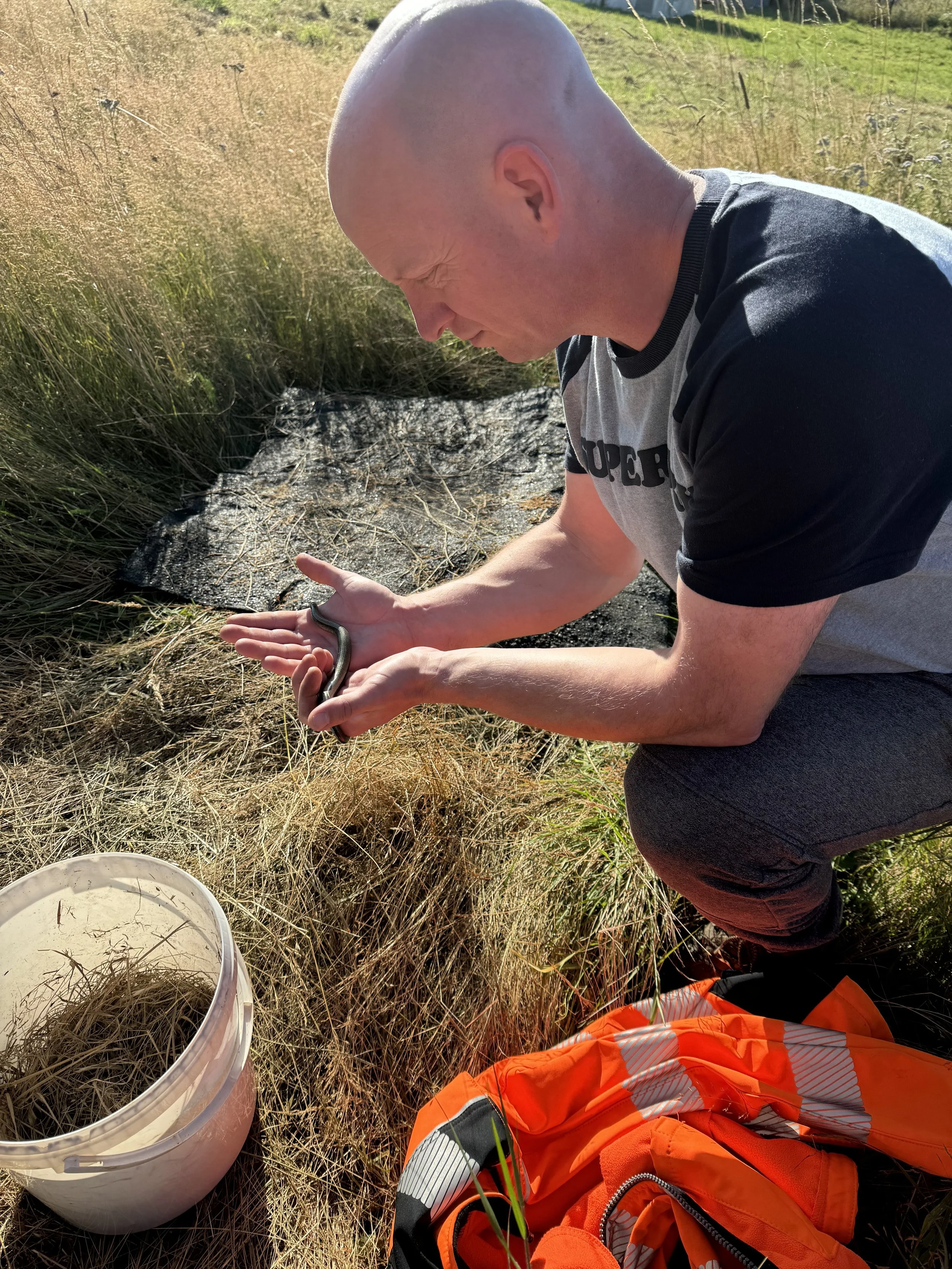
Reptiles, i.e. adder, grass snake, common lizard and slow-worm are protected under Wildlife and Countryside Act 1981. Under the law, these species are protected from injury, killing and sale.
Other reptile species, such as sand lizard and smooth lizard receive additional protection under the European law, including being disturbed in a place of shelter.
Where suitable habitat for reptiles was identified during the Preliminary Ecological Appraisal (PEA), reptile surveys may be required. Reptiles are generally active from March to October, but the most profitable months for surveying tend to be April, May and September. If there is a risk of adder, the optimum window for surveying is March – May, September and October.
To determine presence/absence, typically 7 survey visits are required. In some situations, 20 survey visits may be required to determine distribution and abundance of reptiles on site. Where reptiles are confirmed present, they will need to be relocated prior to works commencing. For more information, see Protected species mitigation.
We also undertake reptile monitoring on site to support conservation works.
We also provide Ecological Clerk of Works (ECoW) services for reptile mitigation. Please see more information about reptile mitigation and ECoW services.
Water vole
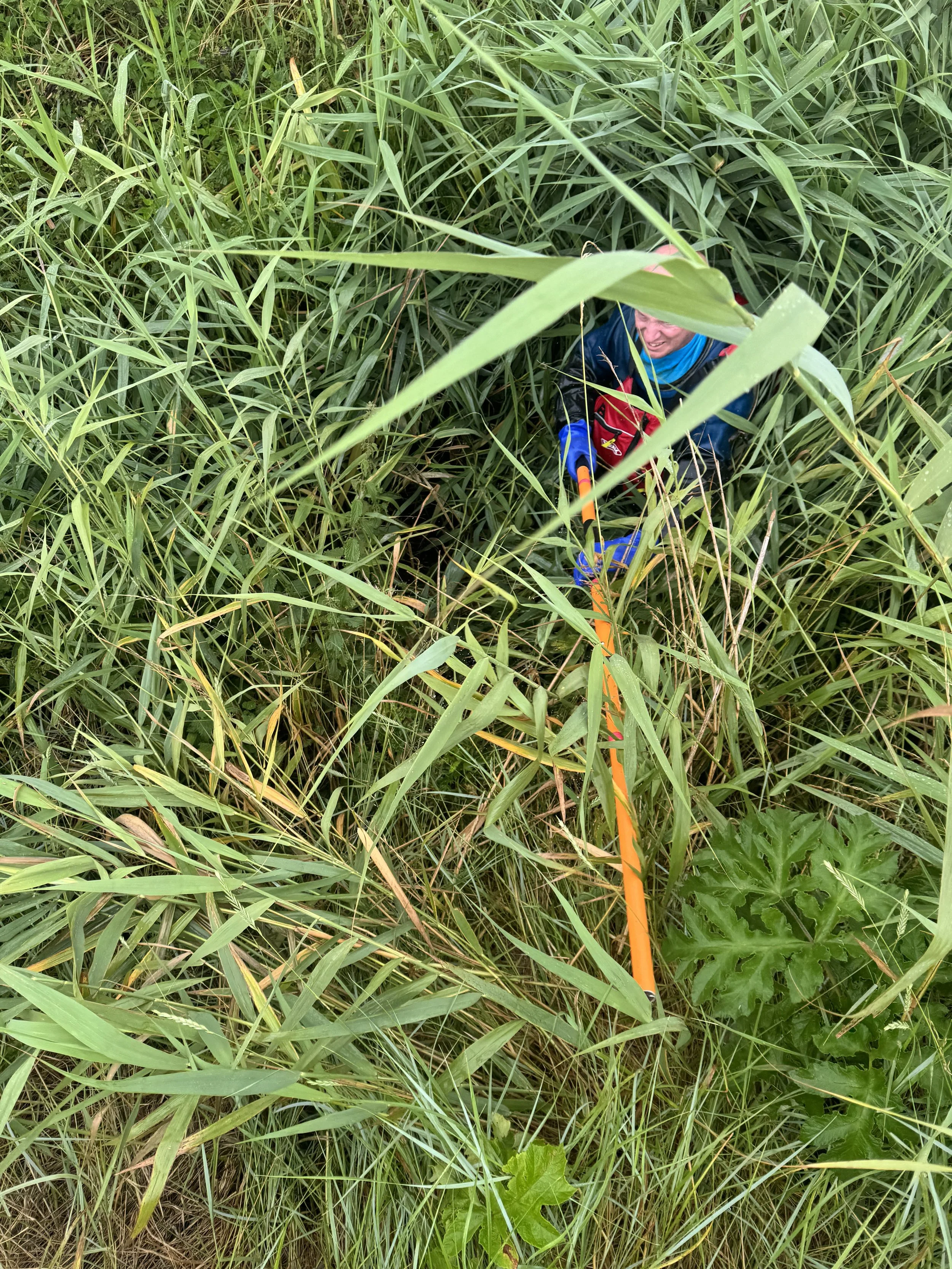
Water vole are fully protected under the Wildlife and Country Act 1981. This species is protected from injury, killing and disturbance whilst in a place of shelter. In the last 30 years, there has been a dramatic population decline due to habitat fragmentation, land management changes and invasive species.
Where suitable habitat for water vole was identified during the Preliminary Ecological Appraisal (PEA), surveys may be required. Typical survey period is April - September inclusive. Two survey visit are required to confirm likely absence. We follow best practice guidance provided by the Mammal Society and CIEEM. We use Habitat Suitability Assessment (Harris et al., 2009) methodology for most comprehensive habitat assessment.
Our principal ecologist is a highly experienced water vole specialist, and holds a water vole displacement mitigation licence (CL31). In 2020, Lee was as Technical Lead for a pipeline scheme across East Anglia, which covered 650 km of watercourses. He oversaw detailed ecological impact assessments and supporting Environmental and Planning Statements to successfully secure planning consent. His role ensured full compliance with wildlife legislation and best practice mitigation for protected species.
Prior to a site visit, our team review information provided and carry out a desktop survey, following which a date is agreed for a site visit. We use specialist equipment, including kayaks, trail cameras, rafts and drones where permitted for comprehensive data gathering.
As part of our standard survey, we survey the site and the wider area to inform the appropriate mitigation options, which could involve water vole displacement. This is a more time and cost efficient way of determining presence and appropriate mitigation measures.
Please see more information about water vole displacement and mitigation options.
Learn more about our work in this case study on our portfolio.
Otter
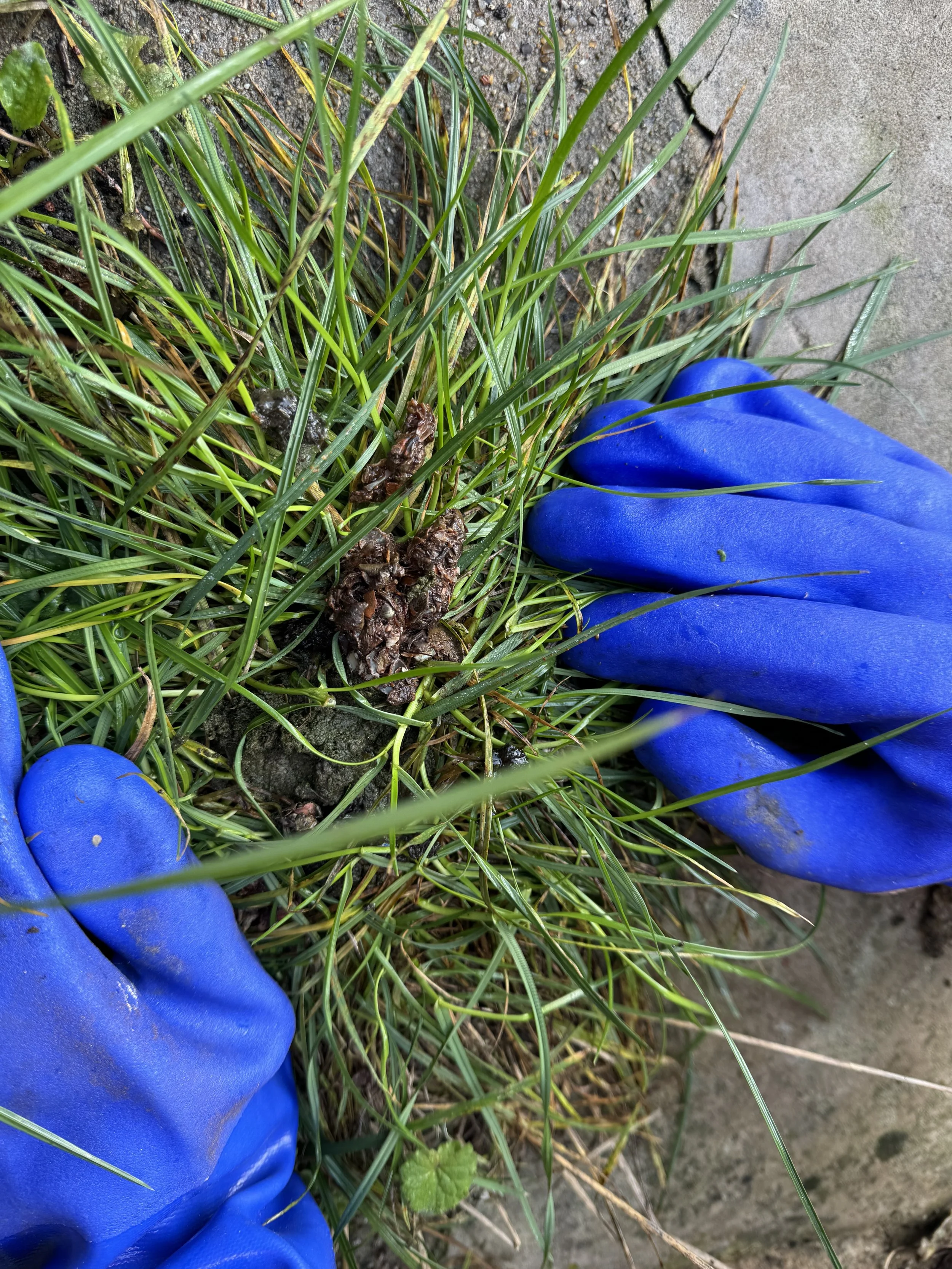
Otter are fully protected under the Wildlife and Countryside Act 1981, which means it is illegal to kill, injure, disturb, or capture otter. Additional protection is extended under the European law, making it an offence to damage, destroy, or obstruct access to an otter holt or resting place.
Field surveys for otter can be carried out any time of the year. The guidance states that the optimal time for field signs checks is between April and October. Considerations will be required for fluctuating water levels, and where these are greater due to fluvial events, surveys between May and September will be more reliable.
We survey the site and the wider area to look for natal holts (where a female gives birth and young stay until they are mobile), couches (resting areas), spraints, anal jelly, tracks/footprints, and slides.
Where potential natal holts and resting places are recorded, we provide trail camera monitoring to check occupancy and activity levels.
Habitat suitability will be recorded to assess the degree of risk that otter may be present or disturbed by the proposed works. We carry out surveys in line with best practice provided by Natural England, JNCC and Scottish Natural Heritage.
We usually incorporate otter surveys with water vole surveys for time and cost efficiency.
Field results are provided in a specialist report, together with assessment of likely impacts on otter due to proposed works, and we recommend mitigation options.
Please see more information about otter mitigation options.
Great crested newt
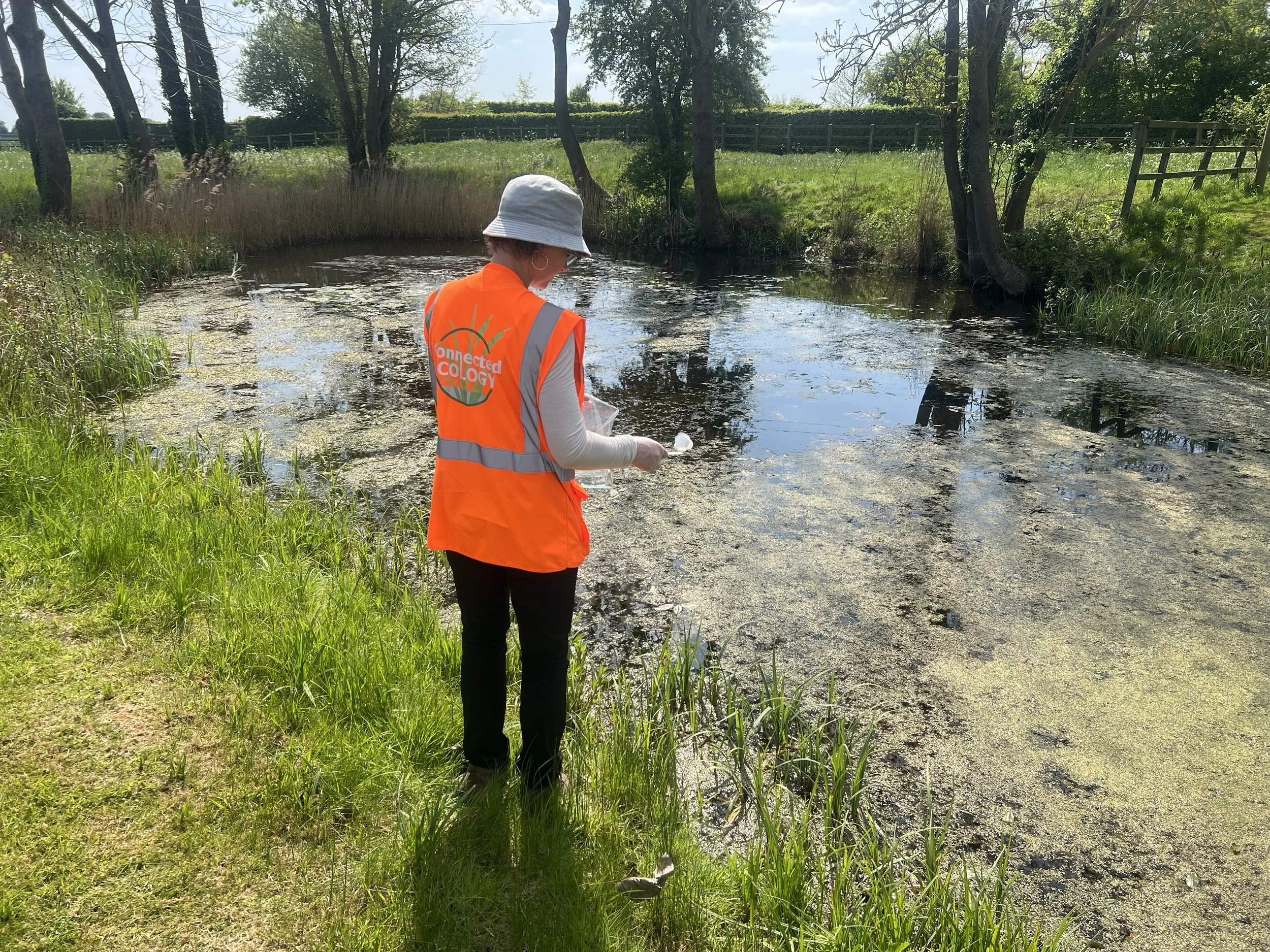
Great crested newt (GCN) are protected under the Wildlife and Countryside Act 1981, which means it is illegal to capture, kill, injure or disturb them. Additional protection is extended under the European law, therefore it is an offence to damage, destroy, or obstruct access to a breeding or resting place.
Where suitable habitat for GCN was identified on site during the Preliminary Ecological Appraisal (PEA), surveys may be required. We use Habitat Suitability Index (Oldham et al., 2000) method to assess habitat quality for GCN, and follow best practice provided by Frog Life and Natural England.
We carry out surveys to confirm if GCN are present or likely absent. This can be achieved in one of the following ways:
Four survey visits. The permitted GCN survey window is between mid-March and mid-June.
eDNA laboratory test. Single visit to collect water samples, followed by laboratory analysis. eDNA surveys can be undertaken between mid-March and end of June, as DNA may remain detectable for up to 21 days after newts have been present.
We are licensed to use a variety of survey methods, including netting, torching, egg searching, refuge searches and bottle trapping where standard survey approach is used. Bottle trapping requires an extra visit on the following morning to check and empty traps. Our team also use eDNA method and arrange laboratory testing.
Once presence, population size or likely absence is confirmed, an assessment of the proposed development’s likely impacts on GCN can be determined. This is provided in a dedicated report, together with the survey findings.
Please see more information about GCN mitigation options.
Birds
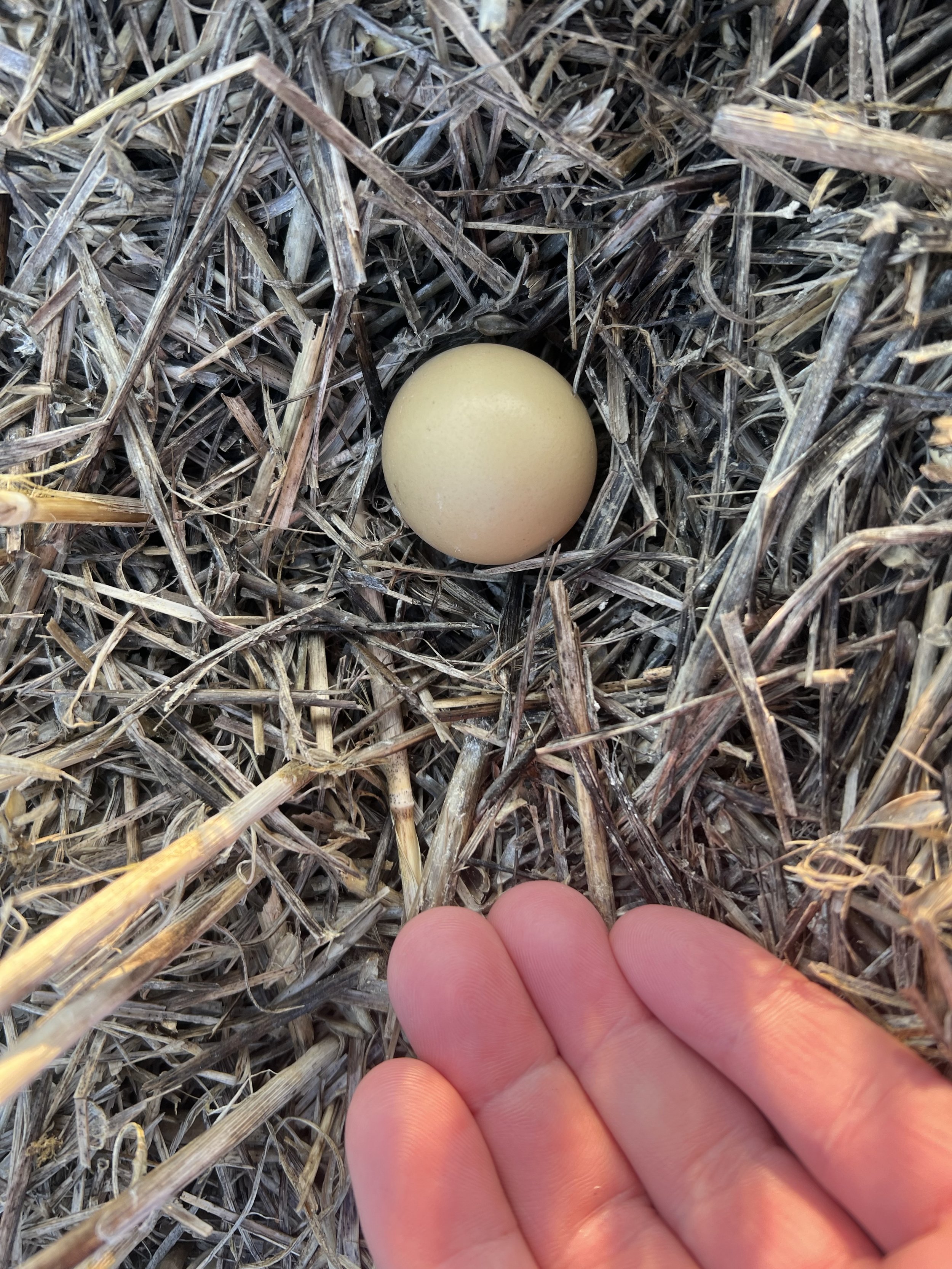
All wild birds, their nests and eggs are protected under Wildlife and Countryside Act 1981.
Nesting bird season is typically March to September inclusive, but some birds can nest all-year round (e.g. barn owl).
We typically undertake nesting bird checks as part of Ecological Clerk of Works (ECoW) using a combination of binoculars, scope and thermal imaging. We also undertake fingertip searches. We follow current best practice provided by Bird Survey Guidelines.
Checks are typically valid for up to 48 hours.
Please see more information about our ECoW services.
Contact Us
Want to discuss ecology requirements for your project? Please provide the following information and we will be in touch shortly:
Brief description of your project
Project location
Expected start date of the works
Any previous ecological assessments for the project